China aluminum sheet pans have become the global backbone of commercial and industrial baking due to their superior heat distribution, lightweight durability, and highly cost-effective manufacturing processes. For bakeries, restaurants, and large-scale food production facilities, these pans represent an optimal balance between operational efficiency and baking performance. Unlike heavier steel alternatives or fragile glassware, aluminum provides rapid heating and cooling cycles, which is critical for achieving consistent product quality across high-volume batches. Sourcing these pans from Chinese manufacturers allows businesses to access advanced metallurgical techniques and scalable production capacities, ensuring that both small artisanal shops and massive industrial plants can acquire reliable bakeware tailored to their specific throughput needs.
The Core Advantages of China Aluminum Sheet Pans
The widespread adoption of aluminum bakeware is not merely a matter of tradition; it is deeply rooted in the physical properties of the metal itself and the manufacturing prowess of Chinese factories. These advantages directly impact the daily operations of culinary professionals, influencing everything from energy consumption to the texture of the final baked goods.
Exceptional Heat Conductivity
The most significant benefit of using aluminum for sheet pans is its extraordinary thermal conductivity. Aluminum conducts heat approximately three to four times more efficiently than steel. This means that when the pan is placed in a hot oven, the entire surface heats up almost instantaneously. For bakers, this translates to even browning, eliminated hot spots, and a perfectly consistent crumb structure across the entire batch. Furthermore, the rapid heat absorption allows ovens to recover their internal temperature more quickly after the door has been opened, leading to reduced baking times and lower energy consumption over extended production shifts.
Lightweight Yet Durable Construction
In a busy commercial kitchen, staff are constantly moving heavy trays in and out of ovens. Aluminum is significantly lighter than steel or cast iron, which dramatically reduces the physical strain on bakers and minimizes the risk of workplace accidents. Despite its light weight, commercially graded aluminum used by reputable Chinese manufacturers possesses ample tensile strength to withstand heavy loads of dough or thick batters. The metal's inherent flexibility also means it can absorb minor physical shocks without shattering or permanently deforming, provided it is handled according to standard kitchen practices.
Key Manufacturing Standards in China
The quality of a sheet pan is entirely dependent on the manufacturing processes and standards adhered to during its creation. Chinese manufacturers have, over the years, heavily invested in modernizing their facilities to meet stringent international food safety and metallurgical standards. Understanding these processes helps buyers appreciate the value and safety of the products they are sourcing.
Material Grades and Alloys
Not all aluminum is created equal, and Chinese manufacturers utilize specific series of aluminum alloys tailored for food contact. Typically, manufacturers rely on high-quality alloy series that balance purity with structural integrity. These specific alloys contain trace amounts of elements like magnesium or manganese, which significantly increase the strength and corrosion resistance of the pan without compromising its thermal properties. The raw materials are rigorously tested for heavy metals and impurities to ensure full compliance with international food safety frameworks.
Surface Treatments and Coatings
To enhance the natural properties of aluminum, manufacturers apply various surface treatments. The most common and highly valued treatment is anodization. Through an electrochemical process, a hardened layer of aluminum oxide is formed on the surface. Anodized aluminum sheet pans are non-reactive, meaning they will not react with acidic foods like tomatoes or citrus, preventing metallic flavors from leaching into the food. This process also creates a highly durable, scratch-resistant surface that is significantly harder than the base metal and naturally non-stick, extending the operational lifespan of the pan.
Practical Applications in Commercial Baking
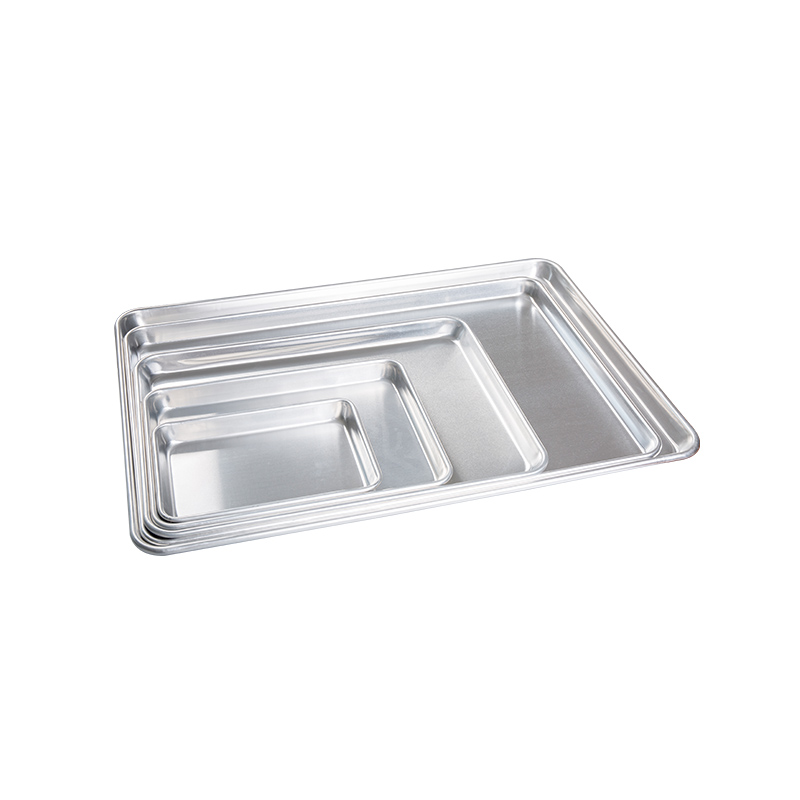
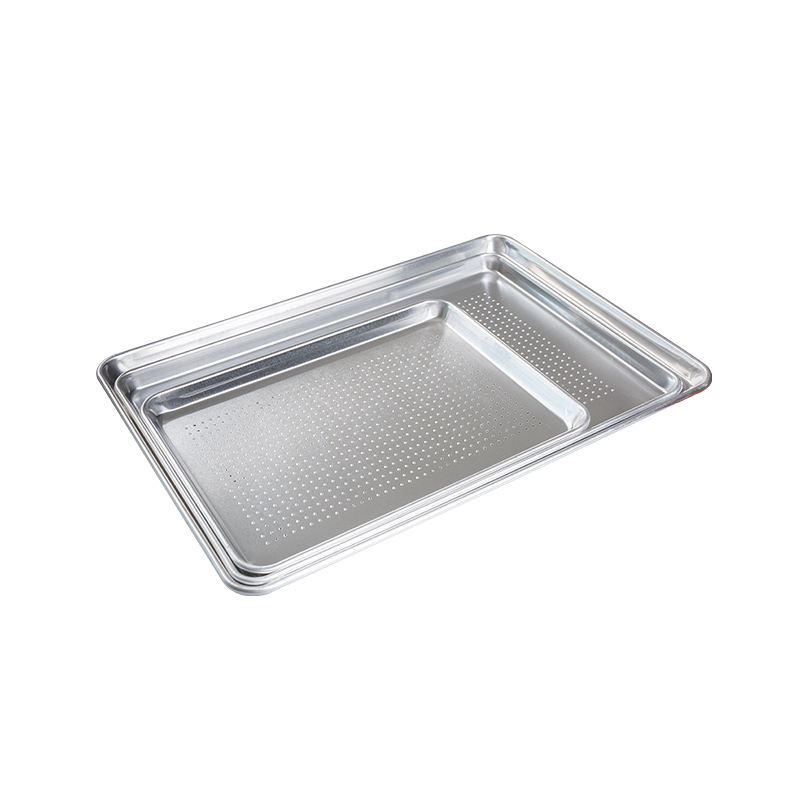
The versatility of China aluminum sheet pans makes them indispensable across various culinary environments. They are not limited to traditional baked goods; their utility spans the entire spectrum of food preparation and service. The flat, rimmed design allows for easy sliding of products in and out of ovens, while the shallow depth maximizes airflow around the food.
- Artisanal Bread and Pastries: Ideal for baking croissants, pastries, and rolls where even bottom browning is crucial.
- Roasting Vegetables and Proteins: Excellent for high-heat roasting, allowing moisture to evaporate quickly for caramelization.
- Freezing and Blast Chilling: The rapid cooling properties of aluminum make these pans perfect for blast chillers, rapidly dropping food temperatures to safe zones.
Comparison of Common Sheet Pan Sizes and Their Applications
| Pan Type |
Primary Dimension |
Ideal Use Case |
| Full Size |
Standard Commercial |
High-volume baking, cafeteria service |
| Half Size |
Half of Full Size |
Smaller batches, toaster ovens |
| Quarter Size |
Quarter of Full Size |
Prep work, ingredient staging |
Maintenance and Care for Longevity
While China aluminum sheet pans are built to withstand the rigors of commercial kitchens, their longevity is heavily dependent on proper maintenance. Incorrect cleaning or handling can drastically reduce the lifespan of the pans and compromise their baking performance. Establishing strict protocols for care is essential for protecting the initial investment.
Cleaning Best Practices
Cleaning aluminum pans requires a delicate balance. While they are generally dishwasher safe in modern commercial settings, frequent exposure to harsh alkaline detergents can cause pitting and discoloration. It is highly recommended to wash the pans by hand using mild soap and warm water. For stubborn baked-on residue, a paste made of baking soda and water, or a gentle non-abrasive scrubbing pad, should be used. Abrasive scouring pads or steel wool must be avoided, as they will scratch the surface, ruin the finish, and create crevices where food particles and bacteria can accumulate.
Preventing Warping and Damage
One of the most common issues with metal bakeware is thermal warping. Aluminum is particularly susceptible to sudden temperature changes, known as thermal shock. To prevent warping, never take a hot pan directly from the oven and place it on a cold, wet surface, and avoid running cold water over a hot pan to cool it down. Instead, allow the pan to cool gradually on a heat-resistant surface or a cooling rack. Additionally, when storing the pans, they should be nested carefully. Dropping heavy objects on stacked pans or forcing them into tight storage spaces can bend the rims and compromise the flat baking surface.
How to Source Quality Aluminum Sheet Pans from China
For businesses looking to import bakeware, navigating the Chinese manufacturing landscape can seem daunting. However, with a structured approach to evaluation, buyers can establish long-term relationships with reliable suppliers. The key lies in verifying capabilities, ensuring material compliance, and understanding the manufacturing techniques employed by the factory.
Evaluating Supplier Capabilities
When assessing potential manufacturers, buyers should look beyond basic communication and pricing. A reputable supplier will have established quality control protocols integrated into their production lines. Inquiring about the manufacturing technique is vital. For instance, pans formed through a process of metal spinning or deep drawing typically exhibit superior structural integrity compared to those made from simple bending and welding. Buyers should request factory audits or virtual tours to verify that the facility utilizes modern, well-maintained equipment and adheres to clean production standards.
Understanding Certifications
Compliance with international food safety standards is non-negotiable. Buyers must request documentation proving that the materials used meet the regulatory requirements of their target market. For North American markets, compliance with relevant food and drug administration guidelines is essential. For European markets, specific food contact material regulations apply. Suppliers should readily provide material test reports from independent, accredited laboratories. Verifying these certifications ensures that the aluminum sheet pans are free from harmful heavy metals and coatings, guaranteeing safety for commercial food contact.
- Request material test reports from accredited third-party laboratories.
- Verify compliance with international food contact regulations.
- Inspect the manufacturing technique for seamless construction.
- Ask for sample batches to test thermal performance and durability under real kitchen conditions.

 English
 Español
 Français



 +86-13482417468
 [email protected]
 No.99, Lane 3670, Waiqingsong Road, Baihe Town, Qingpu District, Shanghai China 201709