China Aluminum Bun Pans Offer the Optimal Balance of Cost and Performance
When evaluating commercial baking equipment, China aluminum bun pans consistently deliver the highest overall value by combining professional-grade thermal performance with highly accessible pricing. For bakeries, restaurants, and large-scale food production facilities, the choice of baking sheet is a foundational decision that directly impacts product quality, kitchen efficiency, and long-term operating costs. While bakeware is manufactured in many regions, aluminum pans produced in China have established themselves as the definitive industry standard due to their advanced manufacturing techniques, massive production scale, and deep understanding of global food service requirements. These pans are not merely budget alternatives; they are meticulously engineered tools that meet the rigorous demands of daily, high-volume baking while keeping replacement costs manageable.
Superior Thermal Conductivity for Consistent Baking
The primary reason aluminum remains the dominant material for bun pans is its exceptional heat-transfer properties. Unlike steel or glass, which require more time to heat up and often create uneven hot spots, aluminum rapidly and uniformly distributes heat across the entire surface of the pan. This characteristic is absolutely critical when baking rolls, buns, and pastries, where uniform browning and consistent internal crumb structure are non-negotiable quality standards.
Chinese manufacturers specifically tune the alloy composition—typically utilizing high-purity aluminum blends—to maximize this thermal response. When a cold dough mass is placed into a commercial oven, the underlying pan must recover its heat quickly to ensure the baking process continues uninterrupted. Aluminum bun pans from China typically exhibit heat transfer rates that are significantly faster than standard carbon steel, reducing overall baking times and allowing kitchens to increase their production output during peak hours. This rapid heat recovery also prevents the bottom of the buns from becoming soggy, ensuring a perfectly baked crust.
Material Specifications and Gauge Variations
Not all aluminum bun pans are created equal, and the thickness of the material—referred to as the gauge—plays a pivotal role in the pan's durability and performance. In the metalworking industry, a lower gauge number indicates a thicker, heavier sheet of metal. Chinese manufacturers offer a comprehensive range of gauges to suit different baking applications and budget constraints.
Standard Gauge Comparisons
Understanding the appropriate gauge for your specific operation prevents both unnecessary overspending and premature equipment failure. A bakery specializing in heavy artisan breads will have vastly different requirements than a high-volume fast-food operation baking lightweight burger buns.
| Material Gauge |
Relative Thickness |
Primary Application |
Expected Lifespan |
| 18 Gauge |
Heavy Duty |
Artisan breads, heavy doughs |
Several years |
| 19 Gauge |
Standard Commercial |
Daily bun baking, pastries |
Moderate to High |
| 20 Gauge |
Economy Light |
Light cookies, occasional use |
Limited |
Comparison of common aluminum bun pan gauges and their ideal use cases
For the majority of commercial bakeries, 19-gauge aluminum bun pans represent the ideal intersection of rigidity and weight. They are sturdy enough to resist warping under heavy loads but light enough for staff to handle comfortably during fast-paced rack loading and unloading.
Advanced Manufacturing and Forming Techniques
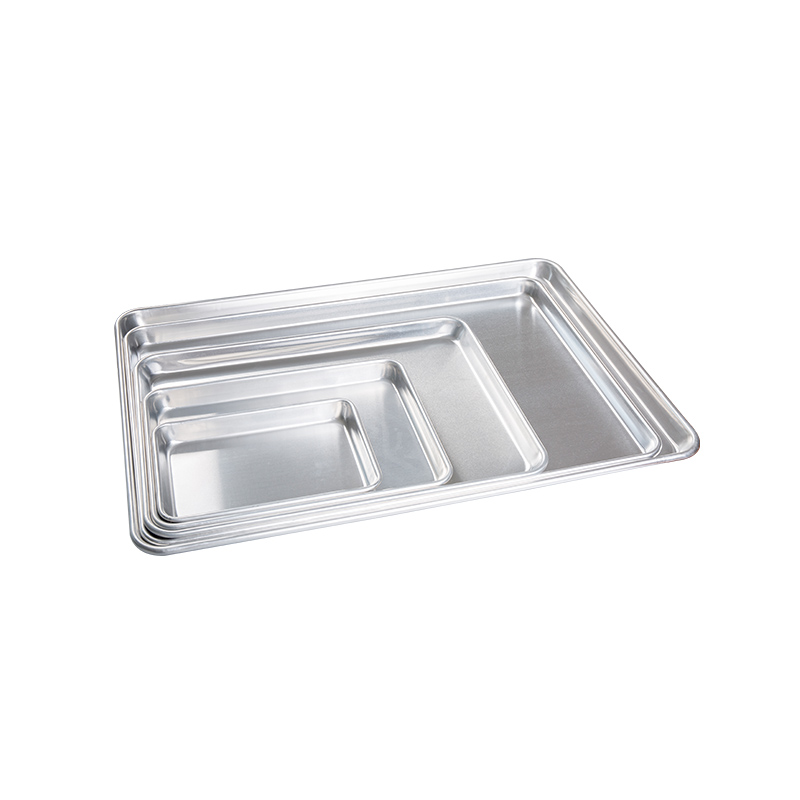
The physical shape and structural integrity of a bun pan are just as important as the raw material. Chinese manufacturing facilities have invested heavily in state-of-the-art metal stamping and pressing equipment that allows for extreme precision in pan forming. The most critical aspect of this process is the creation of a defined, reinforced edge.
The Importance of Reinforced Curled Edges
A high-quality aluminum bun pan features a wire-reinforced, curled rim. During the stamping process, a solid steel wire is encapsulated within the folded aluminum edge. This wire acts as a structural support beam for the entire pan. Without it, the natural expansion and contraction that occurs during repeated heating and cooling cycles will cause the flat baking surface to warp and buckle. Once a pan is warped, it will not sit flat on an oven rack, leading to uneven baking and potential tipping hazards when handled. Chinese factories have perfected this encapsulation process, ensuring the wire is completely sealed within the aluminum to prevent rust or exposed metal shards.
Precision Perforation for Air Circulation
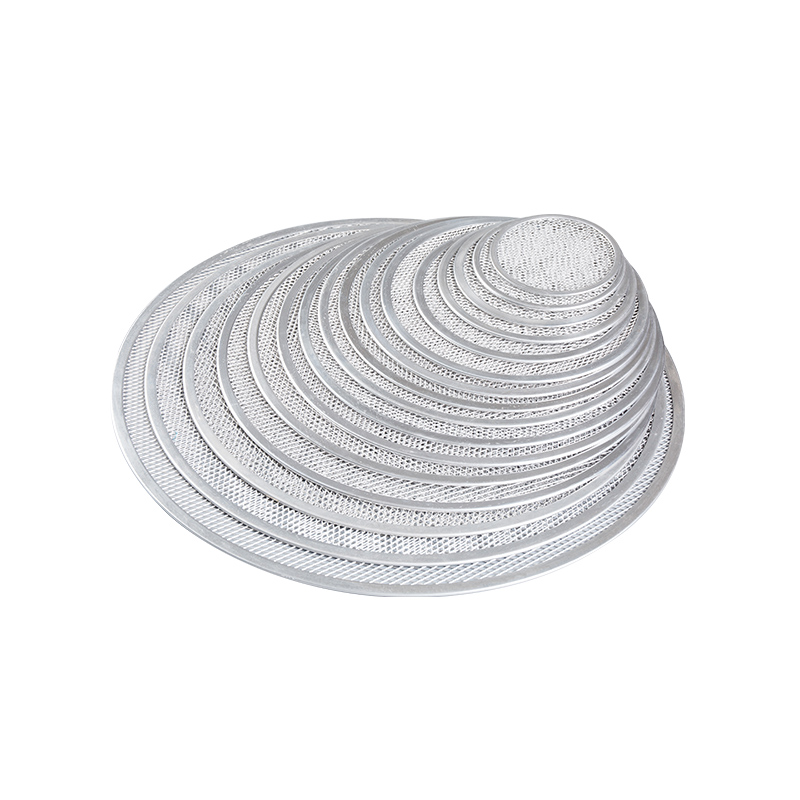
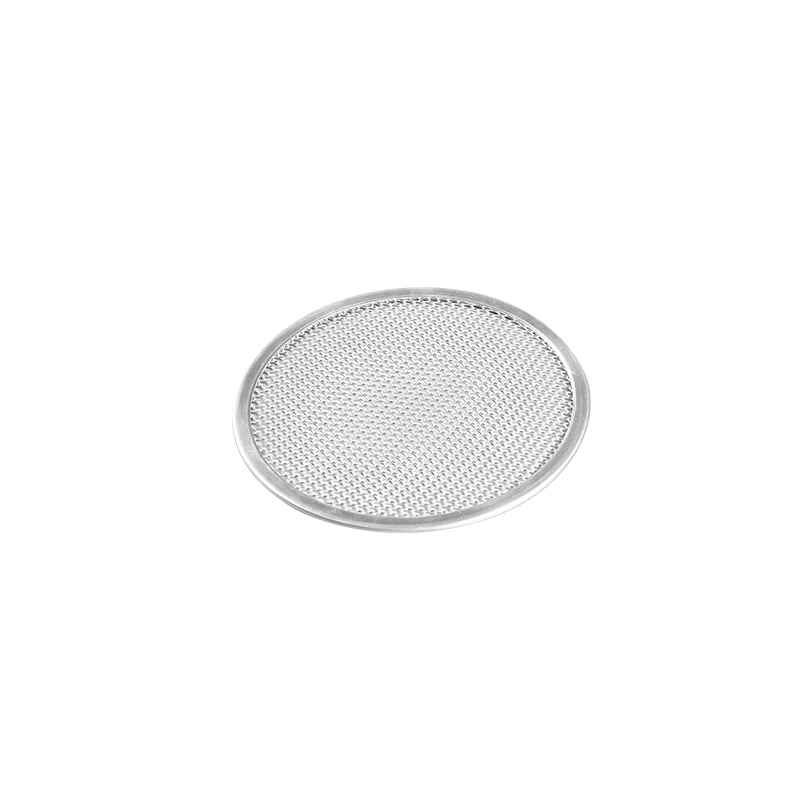
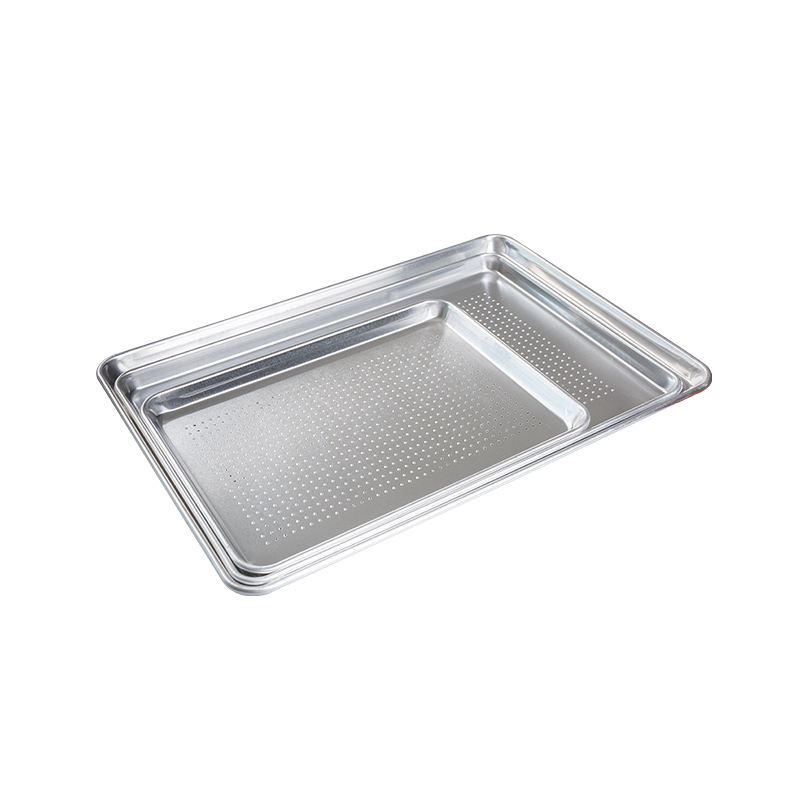
Beyond solid sheets, China aluminum bun pans are widely available in perforated variations. Perforated pans feature thousands of tiny, precisely punched holes across the baking surface. These holes allow direct contact between the hot oven air and the bottom of the dough. This is particularly beneficial for baking crusty rolls or hard rolls, where a dry, crisp bottom crust is desired. The advanced punching machinery used in Chinese facilities ensures that the holes have smooth, deburred edges, preventing dough from sticking or tearing when the pans are dumped.
Coating Technologies: Bare vs. Non-Stick
Buyers of China aluminum bun pans are typically presented with two primary surface options, each serving a distinct operational purpose. The choice between bare aluminum and coated aluminum fundamentally changes how the pan interacts with dough and how it must be maintained.
Bare Aluminum Surfaces
Bare, uncoated aluminum pans are the traditional workhorses of the baking industry. They are typically seasoned over time through a process of baking on small amounts of oil or fat. As this polymerized oil builds up, it creates a natural, semi-non-stick surface. The primary advantages of bare pans are their extreme durability and their ability to withstand very high oven temperatures. Bare aluminum pans can safely endure continuous oven temperatures exceeding 450 degrees Fahrenheit without degrading. They are also highly resistant to scratching from metal utensils.
Non-Stick Coated Surfaces
To speed up production and reduce the need for manual greasing, many Chinese manufacturers apply advanced non-stick coatings. Modern coatings are typically silicone-based or PTFE-based formulations designed to withstand the harsh chemical environment of commercial ovens. These coatings provide an immediate release surface, drastically reducing product sticking and making pan washing significantly easier. However, operators must be careful with coated pans, as they cannot withstand the same extreme temperatures as bare aluminum, and abrasive cleaning methods will quickly destroy the coating.
| Feature |
Bare Aluminum |
Non-Stick Coated |
| Release Properties |
Requires seasoning/greasing |
Excellent immediate release |
| Maximum Heat Tolerance |
Very High |
Moderate |
| Cleaning Effort |
Requires soaking and scrubbing |
Wipes clean easily |
| Longevity |
Can last indefinitely |
Degrades over time |
Operational differences between bare and coated aluminum bun pans
Standardization and Equipment Compatibility
A critical but often overlooked aspect of purchasing commercial bakeware is dimensional standardization. Commercial bakeries rely on standardized oven racks, proofing cabinets, and pan washing equipment. If bun pans do not adhere to exact dimensional tolerances, the entire production line suffers.
Chinese manufacturers are deeply integrated into the global supply chain and strictly adhere to international baking equipment standards. The most common size is the full-sheet pan, which is manufactured to precise dimensions that allow them to slide smoothly into standard rack systems. Consistent dimensional accuracy ensures that pans stack securely for proofing and storage, preventing dangerous leaning or sliding that could cause workplace injuries or damaged products. Furthermore, this standardization ensures that automated pan washers can properly clean the pans without mechanical jams.
Economic Impact on Food Service Operations
The financial implications of choosing the right bun pan extend far beyond the initial purchase price. In a high-volume bakery, hundreds or even thousands of pans are in constant circulation. The cost of replacing warped, damaged, or corroded pans can quickly become a significant line item in an operational budget.
China aluminum bun pans fundamentally alter this cost dynamic. The manufacturing efficiency and massive scale of Chinese metalworking facilities allow them to produce commercial-grade pans at a fraction of the cost of domestic alternatives in many Western markets. This price advantage does not equate to inferior quality; rather, it reflects optimized supply chains, localized access to raw aluminum, and highly automated production lines.
By lowering the replacement cost, bakeries can afford to maintain a larger inventory of pans. This larger inventory prevents production bottlenecks. For example, if a bakery has enough pans to hold an entire batch of dough during the proofing stage while another batch is in the oven, they can drastically increase their daily output without expanding their physical oven footprint. The lower unit cost of Chinese aluminum pans effectively reduces the overhead required to scale up production.
Proper Maintenance to Maximize Lifespan
Even the most robustly manufactured aluminum bun pan will fail prematurely if subjected to improper care. Implementing strict handling and cleaning protocols is essential to realizing the full value of the equipment.
Cleaning Best Practices
The most common cause of aluminum degradation in commercial kitchens is the use of highly caustic chemicals. While it is tempting to use heavy-duty industrial degreasers to speed up the cleaning process, these chemicals—particularly those with high alkalinity—will aggressively attack the aluminum oxide layer, causing pitting, discoloration, and eventual structural thinning. Operators should strictly use cleaning agents specifically formulated to be safe for aluminum.
- Allow pans to cool gradually to room temperature before exposing them to water or cleaning solutions to prevent thermal shock and warping.
- Use pH-neutral detergents and avoid caustic soda or bleach-based cleaners.
- For baked-on carbon, soak the pans in warm water with a safe enzyme-based cleaner rather than using aggressive mechanical abrasives.
- Ensure pans are dried thoroughly before being stacked and stored to prevent the growth of mold and minimize the risk of surface oxidation.
Safe Handling Procedures
Physical abuse is another leading cause of pain failure. Staff should be trained never to use metal spatulas or scrapers to pry stuck products from the pan surface, as this will scratch the aluminum or gouge the non-stick coating. Additionally, pans should never be dropped or thrown onto rack guides. The impact can instantly warp the baking surface or break the wire-reinforced rim, rendering the pan useless for uniform baking. Using specialized pan stackers and transport carts can significantly reduce incidental damage during daily operations.
Environmental Considerations and Recyclability
In an era where food service operations are increasingly scrutinized for their environmental footprint, the lifecycle of kitchen equipment has become a critical consideration. Aluminum is one of the most recyclable materials on the planet, and it retains its properties indefinitely through the recycling process. Unlike coated steel pans, which can be difficult to recycle due to mixed materials, pure aluminum bun pans can be cleanly melted down and repurposed at the end of their functional life.
Furthermore, the durability of China aluminum bun pans means that fewer pans are entering the waste stream over a given time period. A high-quality pan that lasts for years inherently reduces the environmental impact associated with manufacturing, packaging, and shipping replacement units. Choosing long-lasting, bare aluminum pans is a highly effective step toward sustainable kitchen management, as it minimizes both resource consumption and waste generation without requiring any compromise on baking performance.
Conclusion
The dominance of China aluminum bun pans in the global food service industry is not a coincidence. It is the result of a manufacturing sector that has perfectly aligned material science, precision engineering, and economic efficiency to meet the exact needs of professional bakers. By offering rapid and even heat distribution, customizable gauge thicknesses, highly durable wire-reinforced edges, and versatile coating options, these pans provide an unmatched operational advantage. When paired with proper chemical handling and physical care protocols, investing in high-quality Chinese aluminum bakeware remains the most practical, profitable, and reliable decision for any commercial baking operation.

 English
 Español
 Français



 +86-13482417468
 [email protected]
 No.99, Lane 3670, Waiqingsong Road, Baihe Town, Qingpu District, Shanghai China 201709